23 September 2025
Women First: Kenya’s Triumph at World Athletics & Why More Support Matters
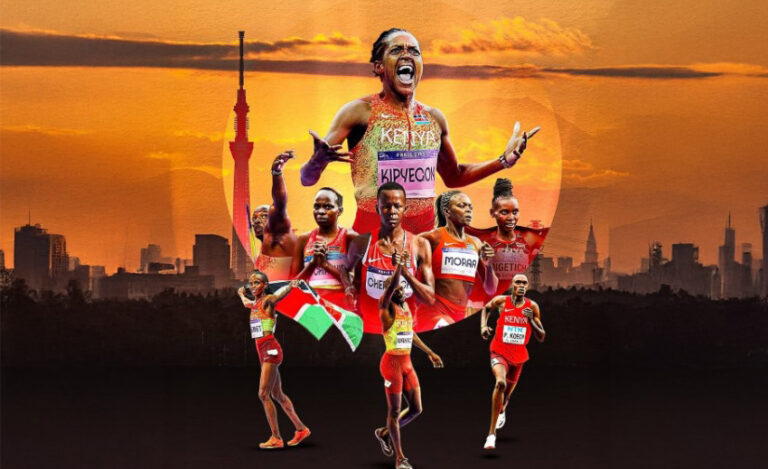
Kenya finished second on the medal table at the 2025 World Athletics Championships in Tokyo with eleven medals: seven gold, two silver and two bronze. Of those seven golds, six were won by women, underlining both Kenya’s global competitiveness and the strength of women in sport.
Kenyan Women Leading the Way
Kenya’s female athletes delivered dominant performances across track and road events:
- Beatrice Chebet claimed double gold in the 5,000m and 10,000m.
- Faith Kipyegon secured her fourth world title in the 1,500m.
- Faith Cherotich set a championship record in the 3,000m steeplechase.
- Peres Jepchirchir won the women’s marathon.
- Lilian Odira stunned the field in the 800m with another championship record.
Together, these results accounted for the bulk of Kenya’s medal haul and positioned the country among the world’s elite.
Behind the Headlines: Deep Structural Gaps
But behind celebrations lie persistent barriers. Recent data from the Tujiamini initiative in 2024 highlights a stark gender gap in Kenyan youth sport: out of 22,655 total applicants, only 2,802 (12.37%) were female. Even in the nation’s capital Nairobi, female representation was just 15%, with some regions dropping to 7%. [DBA Africa]. Far fewer girls than boys are getting involved in sport in Kenya and despite the passion and talent that exists, girls in Kenya still face far greater barriers than boys in simply accessing and participating in sport.
Beyond access, safety remains a pressing concern. A Kenya-wide survey found that 69% of women athletes have either experienced or know someone who has experienced sexual or gender-based violence (SGBV) in sport, with perpetrators including fans, officials, and teammates. [Kenya Times]
That Kenya’s women still delivered record-breaking performances in Tokyo speaks to their strength, but underscores how much more could be achieved if these barriers were dismantled.
Turning Momentum into Opportunity
The lesson is clear: when women are given access, resources and protection, they not only participate, they lead. Kenya’s performance shows what is possible when talent meets opportunity. But too many girls never get the chance to start, let alone reach the world stage.
This is where the real work lies. More grassroots programmes must be created and made inclusive and safe. More investment is needed in equipment, coaching and competition opportunities for young girls. Role models like Chebet, Kipyegon, and Jepchirchir prove what is possible, but their stories should not remain the exception.
At DBA Africa, we see this potential daily in our academies and community programmes, particularly through our Girls & Inclusion Programmes. By creating safe spaces for girls to train, learn and lead, and by supporting female athletes, coaches and mentors, we are helping to break the barriers that statistics reveal. Our commitment is to ensure that every girl who dreams of competing has a pathway not only to sport, but to education,opportunity and empowerment.
Call to Action
If Kenya is to build on the triumphs of Tokyo, investment in women’s sport cannot wait. Donors, federations, schools and communities must work together to close the gender gap in participation, safeguard athletes and build stronger pipelines from grassroots to elite competition.
Kenya’s women have shown the world what excellence looks like. Now, the responsibility is ours: to ensure every girl has the opportunity to step forward, compete and succeed.